The short answer
Some people feel colder after losing weight. Health sources point mainly to body fat: the National Institute on Aging says some body fat is necessary for staying warm. The exact mechanism isn't settled. Wear loose layers with a wool or synthetic layer next to your skin, cover your head, hands and feet, and see a doctor if the cold feels extreme or comes with other symptoms.
If you've started reaching for a sweater while everyone else in the room is fine, you're not imagining it. Cleveland Clinic notes that if you've recently started a new diet and exercise routine, you may feel a bit chillier. Here's what reliable sources say about why, when to get it checked, and how to stay comfortable.
Why do some people feel colder after losing weight?
The most consistent explanation in health sources is body fat. The National Institute on Aging (NIA) says “some body fat is necessary for staying warm.” MedlinePlus, from the National Library of Medicine, notes that some people, often thin older women, do not tolerate cold temperatures because they have very little body fat to help keep them warm. Cleveland Clinic says body fat can help keep your body temperature normal, and links the chilly feeling after a new diet and exercise routine to burning off body fat.
Eating less may also play a part. In a six-month trial of 48 adults published in JAMA in 2006, core body temperature dropped slightly in two of the three groups that cut calories, by 0.2°C and 0.3°C (roughly 0.4°F to 0.5°F). That was a small study of calorie restriction, not of GLP-1 medications. It shows a possible link, not an explanation for your body.
None of these sources pins down how much each factor matters, and none of them looks at GLP-1 medications specifically. So the honest answer is that the mechanism isn't settled. What the sources do agree on is when feeling cold deserves a closer look.
When should feeling cold be checked by a doctor?
Feeling a little chilly is one thing. Feeling cold all the time, or cold alongside other symptoms, deserves a conversation with your doctor. MedlinePlus lists several possible causes of cold intolerance. They include anemia, an underactive thyroid (hypothyroidism), blood vessel problems such as Raynaud phenomenon, and anorexia nervosa. Another is a problem with the hypothalamus, the part of the brain that regulates body temperature. MedlinePlus advises contacting your health care provider if you have long-term or extreme intolerance to cold.
Here's what NIH sources list for two of those causes:
- Underactive thyroid. The NIDDK lists trouble tolerating cold among the common symptoms, along with fatigue, joint and muscle pain, dry skin or dry, thinning hair, a slowed heart rate and depression. It says the diagnosis can't be based on symptoms alone, and a blood test might confirm it. If your hair has been shedding too, see our guide to hair shedding during rapid weight loss.
- Anemia. The National Heart, Lung, and Blood Institute (NHLBI) lists chills among the general symptoms of anemia, along with weakness, paleness, tiredness, shortness of breath, headache, and dizziness or fainting.
Use this table as a quick check:
| What you notice | What the source says | Source |
|---|---|---|
| You're cold when others around you are comfortable | If you're the only one reaching for a sweater, speak to your doctor | Cleveland Clinic |
| Cold plus fatigue, tingling in your hands or feet, or weakness | A sign there may be more going on than a low thermostat | Cleveland Clinic |
| Long-term or extreme intolerance to cold | Contact your health care provider | MedlinePlus |
| A leg or thigh that suddenly feels cold | An acute blockage in the leg arteries can make legs feel cold and is an emergency that warrants immediate attention | Cleveland Clinic |
| Shivering, pale skin, slurred speech, or feeling sleepy, angry or confused in the cold | Possible hypothermia, a medical emergency: call 911 right away | NIA |
The NIA explains that hypothermia happens when the body's core temperature drops below 95°F (35°C), and that it can also happen at cool temperatures above 40°F (4°C) if you get chilled from rain, sweat or cold water.
What should you wear to stay warm?
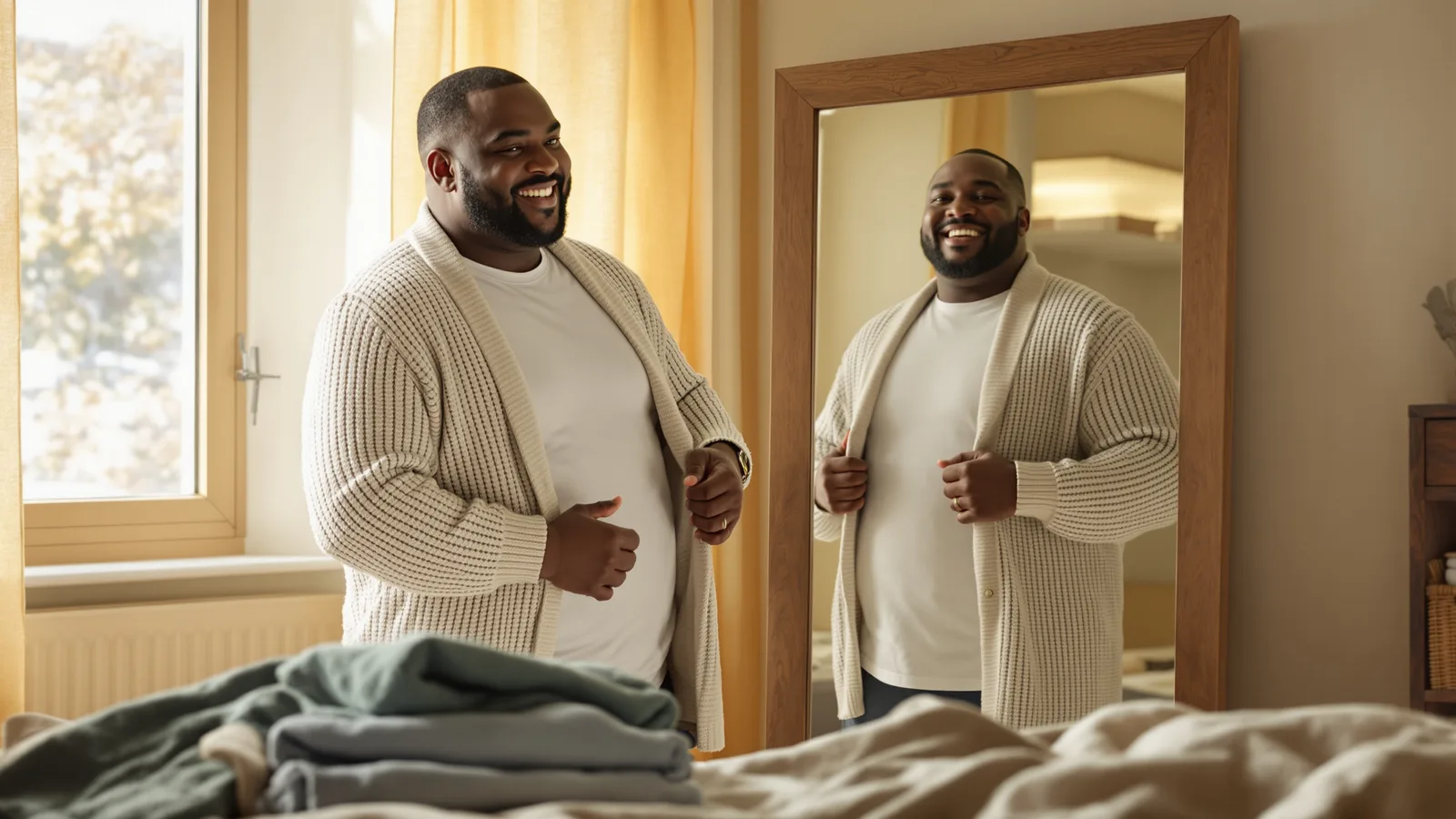
Layers do most of the work. The NIA explains that the air between layers helps keep you warm. NIOSH, the CDC's workplace safety institute, recommends several layers of loose clothing for better insulation. Take layers off if you begin to sweat, it says, and put them back on when you cool down.
A simple three-layer setup, based on NIOSH guidance:
- Inner layer. NIOSH says inner layers should be wool or synthetic fabrics to wick away moisture. Thin thermal tops and leggings, the “long underwear” the NIA mentions, belong here.
- Middle layer. A warm sweater, cardigan or fleece that you can take off easily when you heat up.
- Outer layer. For going outside, NIOSH says outer layers should be wind and water-resistant.
Cover the edges, too. The NIA recommends a hat, scarf and gloves or mittens to prevent loss of body heat through your head and hands. The National Weather Service says mittens are better than gloves. Staying dry matters as much as staying covered. NIOSH says to avoid wearing wet clothes, and the NIA says to change out of damp or wet clothes as soon as you can.
Heading out on a cold day? The NIA suggests a few extra steps. Consider disposable or rechargeable hand- and foot-warming products. Keep warm blankets and extra cold-weather clothing in your car. And on windy, cold or damp days, don't stay outside for long.
If your sweaters now hang off you, or your wardrobe is changing faster than the weather, our guide on what to wear while you're losing weight fast can help.
How can you stay warm at home?
The NIA has a practical list for indoor warmth. Here it is, with a few additions from other sources:
- Dress for the day, even indoors. The NIA suggests dressing warmly on cold days even if you're staying inside.
- Keep your feet warm. Wear socks and slippers. If your feet tend to get damp, wool or synthetic socks follow the same idea as NIOSH's inner-layer advice: fabrics that wick moisture away.
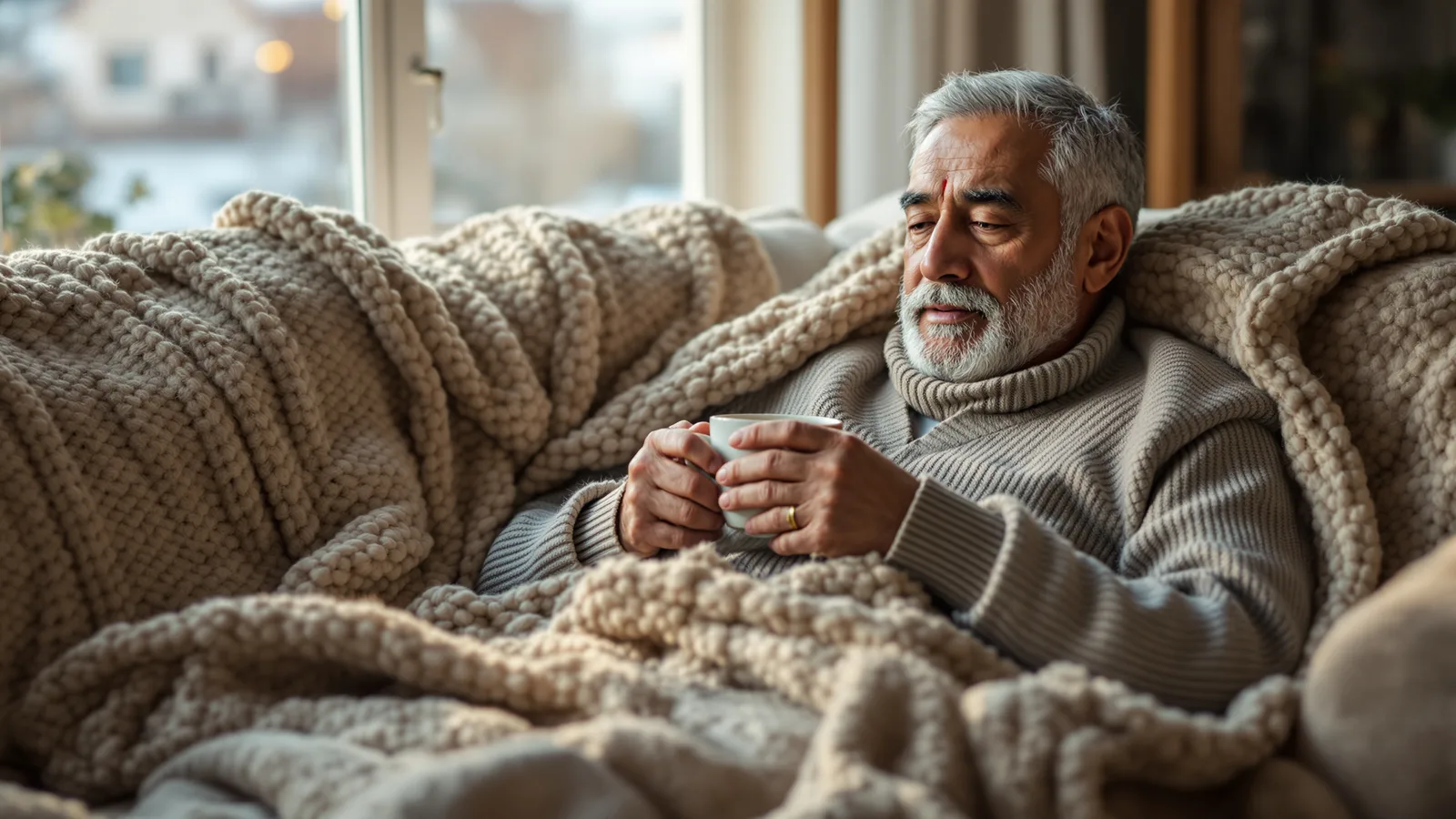
- Keep a throw within reach. The NIA mentions making use of throw blankets. At bedtime, it suggests extra covers, long underwear under your pajamas and a head covering.
- Check the thermostat. For older adults, the NIA recommends setting the heat to at least 68°F (20°C). It notes that even mildly cool homes of 60 to 65°F (about 16 to 18°C) can lead to hypothermia in older adults.
- Block drafts. Put a rolled towel in front of doors, keep blinds and curtains closed, and use weather stripping or caulk around gaps in windows, the NIA says.
- Sip something warm. NIOSH notes that warm beverages may help increase body temperature. In extreme cold, the National Weather Service suggests eating hot foods and drinking warm drinks several times during the day. Herbal tea, broth or plain warm water are easy options. For more on fluids, see our guide to staying hydrated on a GLP-1.
- Go easy on alcohol. The NIA says alcoholic drinks can make you lose body heat.
Are heated throws and space heaters safe to use?
A heated throw can feel wonderful on a cold evening. Use it with care. The U.S. Consumer Product Safety Commission (CPSC) has recalled heated throws and blankets that could overheat, posing fire and burn hazards. In July 2026 it announced a recall of heated throws and blankets whose electrical cords could detach and ignite. Before you buy one, or keep using an older one, check the CPSC recall list, and follow the instructions that came with it.
Space heaters need the same caution. The NIA warns that some space heaters are fire hazards or can increase the risk of carbon monoxide poisoning, and points readers to the CPSC for safe-use information.
Feeling cold is one of many small changes that can come with losing weight quickly. Dress for the temperature you actually feel, keep a warm layer close, and bring up anything that seems out of proportion with your doctor. If your clothes no longer fit as your size changes, Next Size Club members get a capsule of about 6 everyday basics in their current size, with a new capsule each time their size changes.
This guide is general information, not medical advice. Next Size Club does not sell, prescribe or recommend medication. For anything about your treatment, talk to your prescriber.
Questions people ask
Is feeling cold a side effect of GLP-1 medications?
Neither the Wegovy nor the Zepbound prescribing information lists feeling cold or chills among its side effects. That doesn't settle the question for you personally. The NIA notes that some medications, prescription and over the counter, can affect body heat, and suggests asking your doctor whether yours might.
Will I always feel this cold?
The sources in this guide don't say how long it lasts. Cleveland Clinic says there's no real time frame for the cold feeling, and that what matters is whether it's out of proportion, such as being the only one in your household who feels cold. If it lasts or gets worse, talk to your doctor.
Is cotton a bad choice when I'm cold?
For the layer next to your skin, NIOSH recommends wool or synthetic fabrics because they wick away moisture, and it advises avoiding wet clothes. The CDC's cold-stress guidance on preventing hypothermia in cold water also names wool and synthetics, not cotton.
What should I do if someone seems dangerously cold?
The NIA calls hypothermia a medical emergency and says to call 911 right away if someone shows signs of it. While you wait, it suggests moving the person somewhere warmer, offering a warm drink and wrapping them in dry blankets, towels or coats. The CDC adds that you should not give alcoholic drinks, and not try to give any drink to someone who is unconscious.
Sources
- National Institute on Aging (NIH) — Cold Weather Safety for Older Adults
- MedlinePlus (National Library of Medicine) — Cold intolerance
- Cleveland Clinic Health Essentials — Why Am I Always Cold?
- Heilbronn LK et al., JAMA 2006 — Effect of 6-month calorie restriction on biomarkers of longevity, metabolic adaptation, and oxidative stress in overweight individuals
- NIDDK (NIH) — Hypothyroidism (Underactive Thyroid)
- NHLBI (NIH) — Anemia: Symptoms
- CDC / NIOSH — Preventing Cold-related Illness, Injury, and Death among Workers (2019-113)
- CDC / NIOSH — Cold-related Illnesses in Workers
- CDC — Preventing Hypothermia (Winter Weather)
- National Weather Service — During Extremely Cold Weather
- U.S. Consumer Product Safety Commission — Recall of heated sherpa throws and blankets for fire and burn hazards (July 30, 2026)
- U.S. Consumer Product Safety Commission — Recall of heated throws and blankets for fire and thermal burn hazards (November 30, 2023)
- Novo Nordisk — Wegovy (semaglutide) Prescribing Information, revised 06/2026
- Eli Lilly — Zepbound (tirzepatide) Prescribing Information, revised 08/2026