The short answer
While your size is changing fast, build around clothes that flex with you: knits, fabrics with some spandex, pull-on or adjustable waists, and open layers. Buy only a few low-cost basics at each size. Wait to spend on tailoring, good denim and structured pieces until your size has held steady for a few months.
When your size changes every few months, the usual way of shopping stops working. You don't need a new wardrobe at every size. You need a small set of clothes that stretch, adjust and layer, plus a clear idea of what to buy now and what to leave for later.
Why does getting dressed feel harder right now?
Clothes that fit in spring can feel loose by summer. Fitted pieces show the change first. Waistbands gap, pants sit lower on your hips, and shirt shoulders slide past your own. Buying a full set of new clothes at every size gets expensive fast, and much of it won't fit for long.
The fix is to change what you buy, not how often you shop. Look for pieces that cover a range instead of one exact measurement. A pull-on knit pant, a wrap top and an open cardigan can keep working as your body changes. Tailored trousers and a structured blazer usually can't.
It also helps to know what the research says about how much weight people lose on average, and why results vary so much from person to person. That's covered in how many clothing sizes you might drop on a GLP-1.
Which fabrics give you the most room?
Fabric does most of the work here. Knits and stretch blends give you room to move between sizes. Plain woven fabrics hold one shape.
Knits
A knit is made from yarn looped into rows, while a woven is made by crossing two sets of threads. The Textile Resource Library at Pratt Institute says this looped construction is what gives knit fabrics their “characteristic stretch and flexibility.” Three everyday knits are worth knowing by name:
- Jersey. The soft, light fabric of most T-shirts. Pratt describes it as knitted with a single yarn on a single set of needles.
- Rib knit. The fabric with fine vertical lines you see on fitted tanks, cuffs and sweater dresses. According to Pratt, rib knits offer “significantly more stretch across their width than jersey fabrics,” with “excellent stretch and recovery.”
- Interlock. A double knit that looks the same on both sides. Pratt notes it is known for its durability and thickness, which makes it a good choice for pull-on pants and dresses you don't want to cling.
Stretch wovens
Denim, chinos and trousers can stretch too, if the fabric includes spandex. The fiber label tells you. Under the Federal Trade Commission's textile labeling rules, fibers must be listed by their generic names, with the percentage by weight of each fiber in descending order. So a tag that reads “98% cotton, 2% spandex” tells you the fabric has a small amount of stretch fiber in it. Fitted woven pants with no stretch fiber at all are the ones you'll outgrow fastest.
Check the recovery
Stretch only helps if the fabric springs back. In the fitting room, gently pull a section of the fabric and let go. If it returns to its shape right away, it should still look neat as it gets looser on you. If it stays stretched or ripples, it is more likely to bag at the knees and seat after a few wears.
What waistbands and closures adjust as you shrink?
The waist is usually where bottoms stop fitting first, so choose pieces that give you a way to take them in.
- Elastic and drawstring waists. Pull-on pants, joggers and skirts can be cinched as you go. A drawstring adds range that elastic alone doesn't have.
- Paper-bag and tie waists. A gathered waist with a fabric belt looks intentional even when there's extra room.
- Wrap styles. Wrap dresses, tops and skirts overlap at the front, so you decide how snug they sit.
- Side tabs and adjusters. Some trousers have tabs or buttons at the sides that pull in the waist a little.
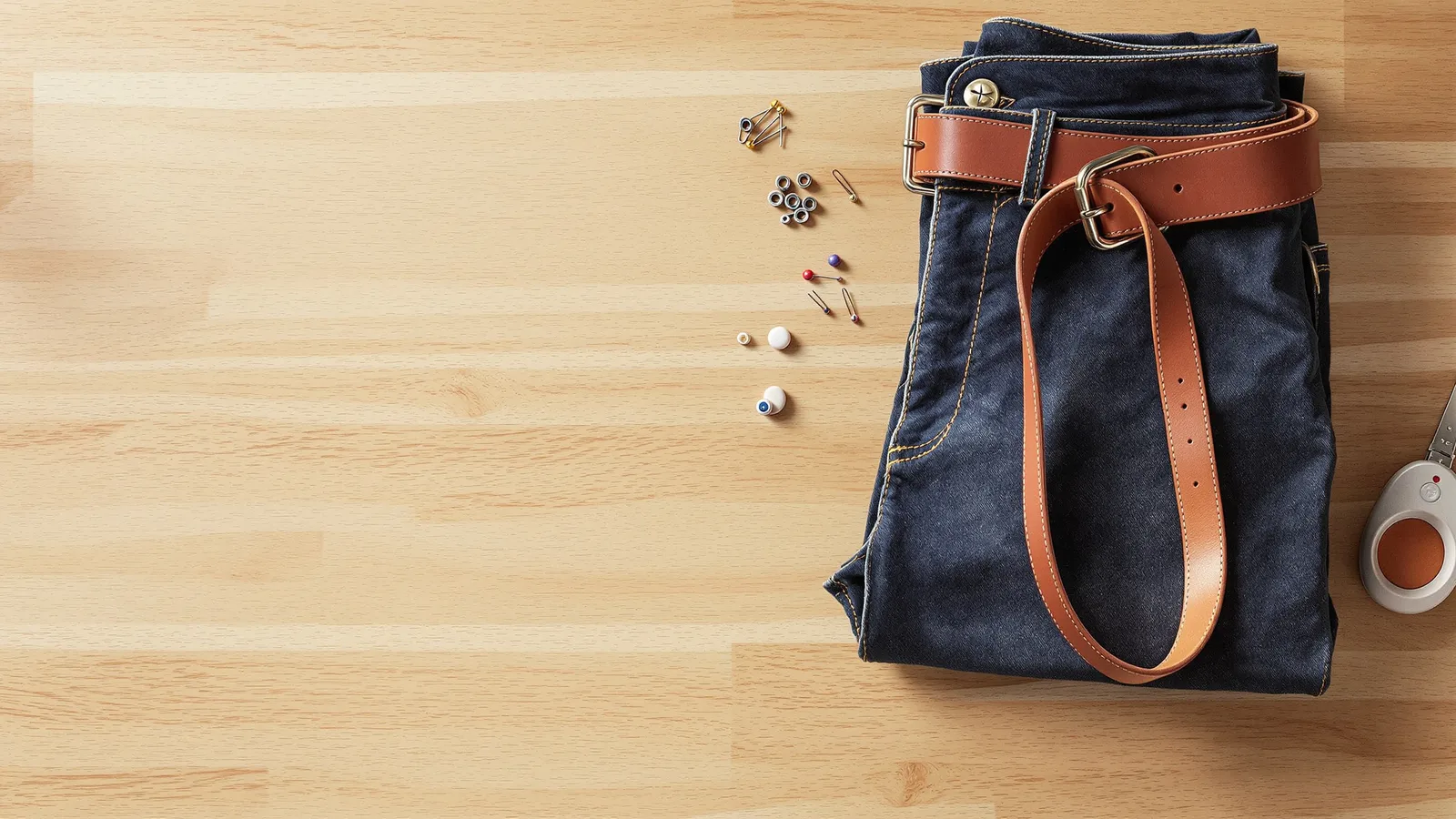
- Belts that adjust in small steps. A ratchet belt has no fixed holes, so you can tighten it a little at a time. The guide to quick fixes for clothes that are too big covers belts, clips and other tricks.
For tops, look for relaxed cuts, dropped shoulder seams and side ties. A top that is meant to be roomy still looks right when it gets a bit roomier.
How does layering help when your fit keeps changing?
Layers don't need to close, button or cling, so they forgive more change than a single fitted piece. A simple layering set looks like this:
- A close-fitting base layer, like a rib-knit tank or a jersey tee. Base layers cost little, so they're the right place to keep the fit precise. Replace them as they loosen.
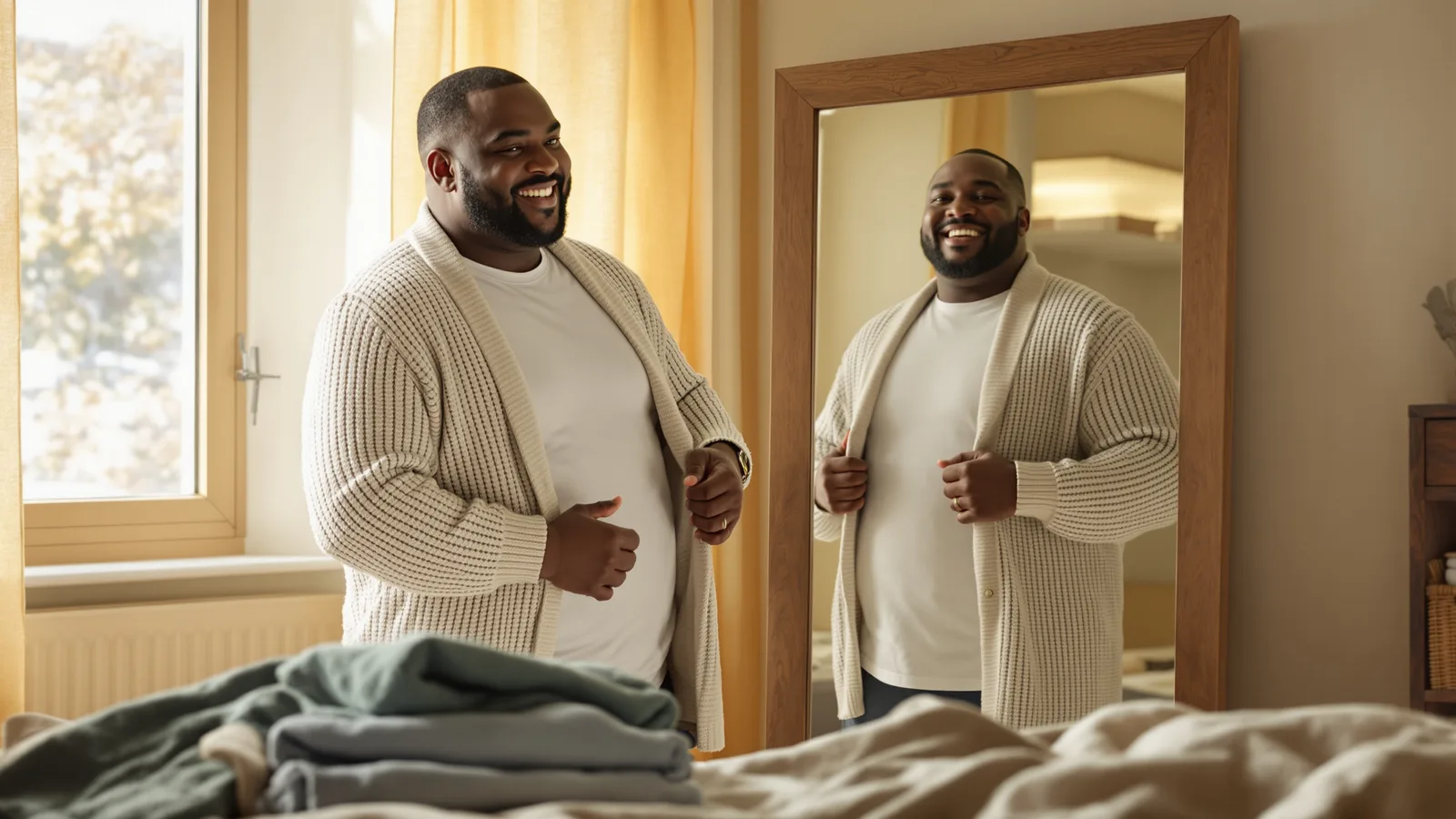
- An open cardigan, a long knit vest or an unstructured jacket that hangs straight down.
- A button-down or shirt jacket worn open over a tee.
- A scarf or wrap for color and for days you want more coverage.
Keep the outer layers in a relaxed fit. They'll still look right when the base layer underneath is a size smaller. You can also add or drop a layer as the room changes through the day.
What should you buy now, and what should you wait on?
Spend on what you wear every day and what needs to fit closely right now. Wait on anything expensive, structured or hard to alter.
| Item | Buy now or wait? | Why |
|---|---|---|
| Underwear and bras | Buy now, a few at a time | They need to fit closely to be comfortable, and you wear them daily. |
| Knit tops and tees | Buy now | Low cost, easy to replace, worn often. |
| Pull-on pants, leggings, joggers | Buy now | Elastic or drawstring waists cover more of a range. |
| Open cardigan or unstructured jacket | Buy now | Open layers keep fitting longer than fitted pieces. |
| A ratchet or stretch belt | Buy now | It keeps loosening pants in place. |
| Jeans | One pair with stretch, then wait | Fitted denim costs more and stops fitting quickly. |
| Tailored trousers, suits, structured blazers | Wait | Their fit depends on exact measurements. |
| Special-occasion outfits | Buy secondhand or rent | You'll wear them only a few times. |
| Winter coat | Buy one roomy enough for a sweater, ideally secondhand | A coat that fits over layers keeps working as you change. |
| Tailoring and alterations | Wait until your size holds steady for a few months | Paying to alter something you'll soon outgrow costs you twice. |
How should clothes fit while you're between sizes?
You'll often land between two sizes. A quick check in the fitting room helps you choose:
- Sit, bend and reach. If the piece is comfortable doing all three, it will be comfortable at your desk and in the car.
- Go smaller in stretch, larger in structure. A stretchy knit in the smaller size will fit now and keep fitting longer. A fabric with no stretch has to be comfortable today, so take the size that fits now.
- Look for a way to take it in. A drawstring, tie, wrap or belt loop means the piece can follow you down a size.
- Don't chase a perfect fit yet. For now, comfortable and put-together is the goal. Precise fit can wait.
How do you avoid wasting money on clothes you'll outgrow?
Run through this short checklist before you buy anything:
- Shop your closet first. Pieces from a smaller size you kept, or clothes that were always a little loose, may fit again soon.
- Buy in small batches. Two or three pieces at a time is easier to replace than a big haul.
- Check the return policy. Keep tags on until you've worn the piece around the house, and note the return window.
- Buy secondhand for short-term pieces. Lower prices make it easier to accept that something fits for one season.
- Skip “goal size” clothes. Buying ahead for a size you might reach ties up money in clothes that may not fit the way you picture. Buy for the body you have now.
- Ask one honest question. Will I wear this every week until it stops fitting? If not, keep looking.
- Plan the exit. When a piece is too big for a belt or clip to fix, pass it on. The guide to what to do with clothes that don't fit anymore walks through selling, donating and tailoring.
If you'd rather not shop at every size at all, that's the problem Next Size Club was set up to handle. Members get a capsule of about 6 everyday basics in their current size. Each time their size changes, a new capsule arrives in the new size, and the old one goes back with a prepaid label. You can see how membership works.
Once your size has held steady for a few months, that's the time to invest in tailoring, good denim and the pieces you plan to keep for years.
This guide is general information, not medical advice. Next Size Club does not sell, prescribe or recommend medication. For anything about your treatment, talk to your prescriber.
Questions people ask
Is it worth buying jeans while I'm losing weight?
If you live in jeans, one pair with some stretch is a reasonable buy. Look for spandex or elastane on the fiber label and fabric that springs back when you pull it. Save the more expensive pairs for when your size has held steady.
Is elastane the same thing as spandex?
Yes. The Federal Trade Commission notes that the international standard name for spandex is elastane, and US labels may use either name. If you see either one on a tag, the fabric contains stretch fiber.
Should I buy smaller clothes as motivation?
It's a gamble with your money. Sizes vary by brand and bodies change in their own way, so a piece bought ahead may not fit the way you imagined. Clothes that fit you today are the ones that get worn.
How many pieces do I need at each size?
Fewer than you might think. A week of tops, three or four bottoms, one or two layers and enough underwear cover most routines. Add pieces only when you notice a real gap in your week.