The short answer
Sort clothes that no longer fit into four piles: tailor, keep for in-between, sell, and donate or swap. Sell newer pieces through consignment or resale apps, donate clean items in good condition, and tailor only what you love. If you itemize, the IRS lets you deduct donated clothing in good used condition at what it would sell for secondhand.
Clothes that no longer fit mark a real change, and you don't have to deal with all of them in one weekend. With a simple sort, most pieces can go somewhere useful: back into your rotation, to a buyer, to a charity or to a friend. Here is how to decide, and what to check before you hand anything over.
How do you decide what to keep and what to let go?
Pick a time when you aren't rushed, try things on, and sort into four piles. Be honest about how often you wore each piece before your size changed. If you rarely reached for it then, you probably won't miss it now.
| Pile | What goes in it | Next step |
|---|---|---|
| Tailor | Pieces you love that are well made and loose mainly at the waist | Get a quote from a tailor |
| In-between | Stretchy or adjustable pieces that still work with a belt or clip | Keep together in one drawer or bin |
| Sell | Newer pieces in very good condition, especially brands people look for | A consignment shop or a resale app |
| Donate or swap | Clean pieces in good shape that you won't miss | A charity drop-off or a swap with friends |
Anything stained, torn or worn thin doesn't belong in the donate pile. Charities can turn those items away, as you'll see below.
What's the best way to sell clothes that don't fit?
Consignment shops
A consignment shop prices and sells your clothes for you, and you get paid when they sell. Terms differ from shop to shop, so ask before you leave anything:
- What share of the sale price do you get, and does it differ for cash and store credit?
- How long will your pieces stay on the floor, and do prices drop over time?
- What happens to items that don't sell, and how long do you have to collect them?
- Which brands, styles and seasons are they taking right now?
Resale apps
With an app, you photograph, list and ship items yourself, and the app takes a fee. Poshmark, for example, says in its own seller FAQ that it charges a flat $2.95 on US sales under $15 and a 20% commission on sales of $15 or more, with no listing fees. Fees change, so read the current terms of any app before you list.
When you list, photograph each piece flat in daylight, give measurements (waist, inseam, chest, length) rather than just the size, and describe any flaws plainly. Buyers can't try things on, so measurements do the work a fitting room would.
A quick note on taxes
According to the IRS, the gain on selling a personal item is taxable, and a loss on a personal item is not deductible. The IRS also notes that used clothing is usually worth far less than you paid for it. If an app sends you a Form 1099-K, ask a tax professional how to report it.
Where can you donate clothes, and what will they take?
Each organization sets its own rules, and local branches often differ, so check the page or call the location you plan to use. Here is what three organizations say on their own sites.
Goodwill
Goodwill of Northern New England, as one example, says its stores take “gently used items in good condition” and that donations “should be clean, safe and resaleable.” Staff may decline items that aren't. It lists shirts, pants, skirts, dresses and sweaters among the clothing it accepts, and says donations to it are tax deductible. Your local Goodwill may keep its own list, so check it before you go.
The Salvation Army
The Salvation Army's thrift store FAQ says its stores generally accept gently used clothing, and that proceeds fund its Adult Rehabilitation Centers. If you drop off, you can get a donation receipt for your taxes. Accepted items vary by location, so check with your local store first, or call 1-800-SA-TRUCK (1-800-728-7825).
Dress for Success
If you have work clothes that no longer fit, Dress for Success affiliates collect professional attire. Each affiliate is its own 501(c)(3) with its own guidelines. Dress for Success Greater New York City, for example, asks for “gently used, nearly-new professional attire” such as suits, blouses, blazers, work shoes and seasonal coats. It does not take jeans and other casual clothes, men's clothing, evening wear or used undergarments, and in-person donations there are by appointment only.
Before any drop-off, wash everything, empty the pockets, and fold or hang pieces so they are easy to sort.
Can you deduct donated clothes on your taxes?
Possibly, if you itemize. IRS Publication 526, the IRS guide to charitable contributions for 2025 returns, sets out the main rules:
- Condition: you can't deduct clothing unless it is “in good used condition or better.”
- Value: you deduct fair market value, and the IRS says the value of used clothing “is usually far less than the price you paid.” Use what buyers actually pay in used clothing stores, such as consignment or thrift shops. The IRS example: a coat bought for $300 three years ago, when similar coats sell for $50 in a thrift store, is worth $50.
- Itemizing: generally, you must itemize on Schedule A (Form 1040) to deduct a charitable contribution.
- Records: for a noncash gift under $250, keep a receipt with the organization's name and address, the date and location, and a description of what you gave. For $250 or more, you need a written acknowledgment from the organization. If you claim more than $500 for noncash gifts, you also file Form 8283.
One change to know about: beginning with tax year 2026, the IRS says people who don't itemize can deduct up to $1,000 ($2,000 for married couples filing jointly) of cash gifts to eligible charities. That new deduction covers cash only. The IRS states that noncash contributions “such as clothing” do not qualify.
Tax rules change, and how they apply depends on your situation. Check with a tax professional before you count on a deduction.
Is tailoring worth it?
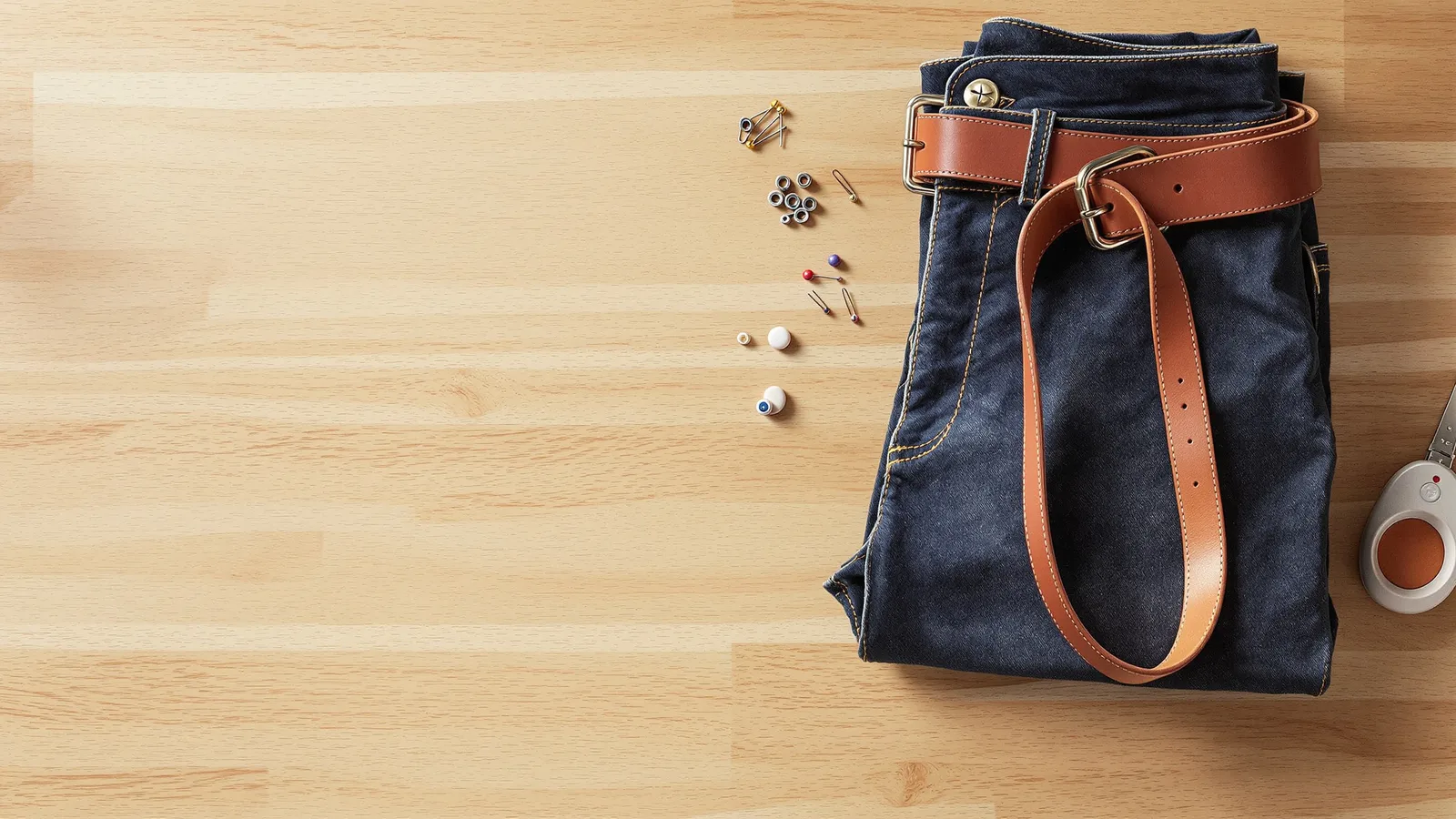
For pieces you love, it can be. Levi's lists waist adjustments among the alterations its Tailor Shop offers, and its own guide to taking in jeans notes that, depending on how much comes out, the pockets may need adjusting too. More change usually means more work, so ask for a quote and compare it with what the piece would cost to replace. For belts, clips and fixes you can do at home, see our guide to quick fixes for clothes that are too big.
Should you swap with friends or keep an in-between set?
Host a clothing swap
A swap turns your old sizes into someone else's new favorites, and it costs nothing.
- Invite friends with a range of sizes and styles.
- Ask everyone to bring clean pieces they would be glad to see someone else wear.
- Sort by type and size on a bed or table.
- Take turns choosing, one piece per round, so it stays fair.
- Bag the leftovers and drop them at a donation center on the way home.
Keep a small in-between set
If your size is still changing, a few forgiving pieces bridge the gap: knits with some stretch, pull-on or drawstring waists, wrap styles, and a ratchet belt (Next Size Club's accessories shop carries them). Keep them in one drawer so you're not digging through the whole closet each morning. For more ideas, see what to wear while losing weight fast.
Keeping a favorite piece or two for sentimental reasons is fine too. Fold them into a labeled bin and store it out of the way.
And if you'd rather not repeat this sort every time your size changes, that is what Next Size Club is for. Members get a capsule of about 6 everyday basics in their current size. When their size changes, a new capsule comes in the new size and the old one goes back with a prepaid label. First capsules ship around December 14, 2026, US only. See how membership works.
This guide is general information, not medical advice. Next Size Club does not sell, prescribe or recommend medication. For anything about your treatment, talk to your prescriber.
Questions people ask
Will charities take clothes with small flaws?
They may not. Goodwill of Northern New England says staff may decline items that aren't clean or saleable, and the IRS doesn't allow a deduction for clothing that isn't in good used condition or better. If a flaw is minor and easy to mend, fix it before you donate.
How do I get a receipt for a clothing donation?
Ask for one when you drop off. The Salvation Army says drop-off donors can receive a donation receipt, and Goodwill of Northern New England links to a form for requesting a receipt for a past donation. The IRS says you need a receipt to deduct a noncash gift under $250, so it's worth getting one every time.
Should I keep clothes in case my size changes again?
That's your call, and there's no wrong answer. If keeping a few favorites gives you peace of mind, store them in one labeled bin and let the rest go to people who can wear them now. Look through the bin again each season and decide fresh.
Is it better to sell or donate?
It depends on the piece and on your time. Newer pieces from brands people search for can be worth listing, while everyday basics may not be worth the photos and shipping. Donating is faster, and if you itemize, it may count toward a deduction.
Sources
- IRS — Publication 526 (2025), Charitable Contributions
- IRS — Working Families Tax Cuts: One, Big, Beautiful Bill provisions (charitable deduction for non-itemizers)
- IRS — Topic no. 506, Charitable contributions
- IRS — Form 1099-K FAQs: What to do if you receive a Form 1099-K
- Goodwill of Northern New England — Acceptable Donations
- The Salvation Army Thrift Stores — FAQ
- Dress for Success Greater New York City — Donate
- Poshmark — Seller Updates (FAQ: What are the fees for selling on Poshmark?)
- Levi's — Tailor Shop
- Levi's — How to Take in the Waist of Jeans